Joy as a Form of Resistance!

In a time where Black communities across America face a relentless stream of cultural, political, and emotional trauma—joy becomes more than a feeling. It becomes a radical act. The weight of racism, economic disparity, police violence, erasure, and political disregard bears down with unrelenting force. And yet, against this backdrop of injustice, Black joy rises. Not because the world has given us permission, but because we’ve chosen it as a form of resistance.

Joy Is Not a Distraction. It’s a Declaration.

In the realm of mental health, joy is often regarded as a byproduct of healing. But for Black Americans navigating a sociopolitical climate marked by racial injustice, cultural erasure, and historical trauma, joy is not just a feeling—it is an act of survival. It is, quite literally, resistance.

From a clinical perspective, persistent exposure to racialized trauma can lead to cumulative stress—often referred to as weathering—that takes a toll on both mental and physical health. The ongoing impact of police violence, health disparities, microaggressions, and systemic inequity has left many Black individuals in a chronic state of hypervigilance. For some, this manifests as anxiety, depression, racial battle fatigue, or even complex PTSD. Yet in the midst of all this, many in the Black community continue to create space for laughter, love, creativity, and celebration.

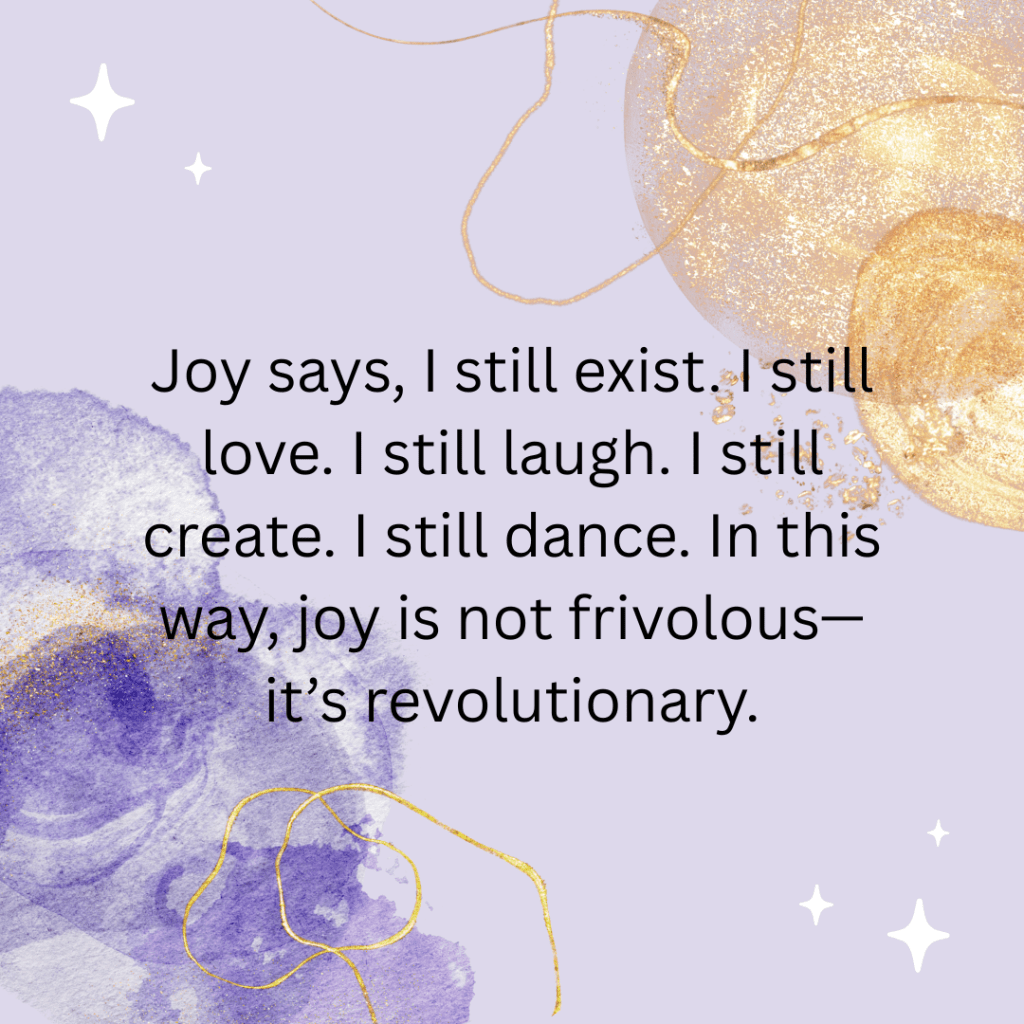
This is not a contradiction. It is a deeply therapeutic response.To be joyful in a world that has consistently tried to rob Black people of their humanity is defiant. Joy says, I still exist. I still love. I still laugh. I still create. I still dance. In this way, joy is not frivolous—it’s revolutionary. In every smile shared at the cookout, in every spontaneous moment of laughter between sisters, in every sideline cheer at youth games, or in every perfectly timed “Y’all alright?” text that turns into a healing phone call—Black joy holds space for healing, connection, and spiritual defiance.
What If You Just Had Fun?

That question—”What if you just had fun?”—might seem too light for times like these. But it’s not meant to suggest apathy. Rather, it’s an invitation to reclaim something sacred.

What if you gave yourself permission to feel free, even when the world tells you to stay on high alert?
What if you allowed your soul to breathe, to dance, to sing, to wear colors that make no sense but bring you joy?
What if you told the truth about your pain—and still chose laughter in the same breath?

In a culture that feeds off Black pain for entertainment, economics, and policy, Black joy breaks the cycle. It rewrites the narrative. It reminds us that our ancestors didn’t just survive—they celebrated, they created, they dreamed.

Choosing Joy Without Denying Reality

Let’s be clear: choosing joy does not mean ignoring grief, anger, or fear. Black people have long held the skill of “both/and”—we grieve and we grind, we rage and we rest, we cry and we cook. We understand that joy can live in the same room as pain.

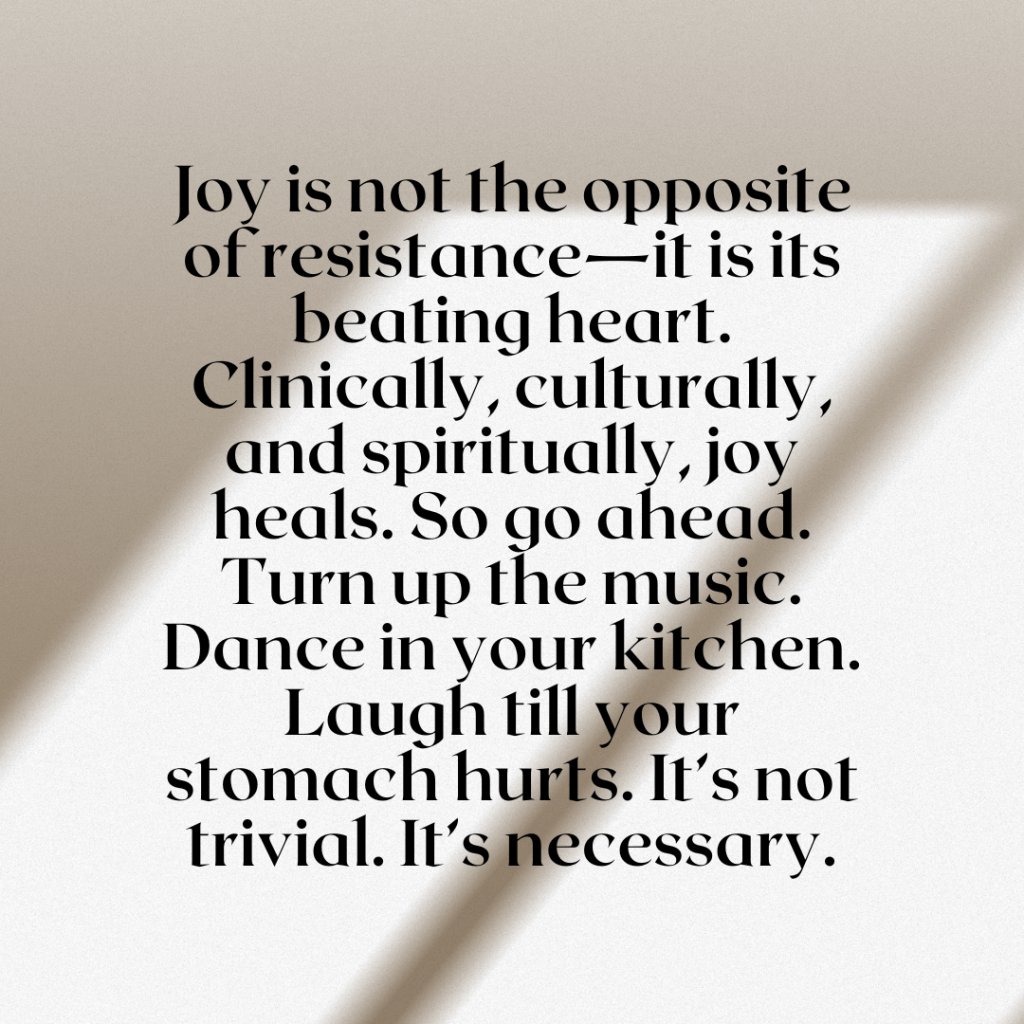
To rest, to dance, to play spades, to sing loudly off-key, to roller skate at sunset, to tell that same funny story one more time—is to declare, I will not be defined by trauma alone. That is not trivial. That is sacred.
A Call to Radical Joy

This is your reminder: Your joy is not an accessory to your activism. It is part of your liberation. Protect it. Practice it. Pass it on.

So yes, in this time of cultural reckoning and social fatigue, what if you just had fun? Not to run from what’s wrong, but to ground yourself in what’s still right. In who you still are. In what you still deserve.

Joy is resistance.
Joy is refuge.
Joy is your birthright.

And nobody—no system, no headline, no policymaker—can take it away.


Mental Health Awareness Month: Honoring Ourselves—Mind, Body, and Spirit

May is Mental Health Awareness Month, and for many in the Black community, this month is more than a campaign—it’s a call to reclaim our wholeness. We are living in a time that is challenging, as we watch the attempted systemic deconstruction of our history and all that makes us who are. During these times, it is essential to remember that mental health doesn’t exist in isolation. It’s interwoven with how we think, how we feel, how we carry ourselves, and how we connect with something greater than us. It’s time to speak boldly about taking care of ourselves—not just surviving, but thriving.

Let’s explore what it truly means to care for our mind, body, and spirit—intentionally, unapologetically, and from a place of cultural pride and ancestral strength.


Mind: Breaking the Silence and Rewriting the Narrative

Mental health in our community has often been clouded by stigma and silence. We’ve been conditioned to be strong, to endure, to “keep it moving” no matter what. But carrying pain in silence doesn’t make us strong—it makes us weary.

This month, let’s normalize mental wellness. Seeking therapy or counseling isn’t a sign of weakness; it’s a courageous act of self-care. Mental health professionals who understand our cultural context can help us unpack generational trauma, manage stress, and rediscover peace. Even if therapy isn’t accessible right away, writing in a journal, naming our emotions, or engaging in honest conversations can be powerful first steps.

Let’s give ourselves permission to feel without judgment—to grieve, to rage, to hope, to rest. We are not just surviving—we’re learning to heal out loud.

Reflection:

  • What thoughts or beliefs about mental health were you raised with?
  • What do you need to unlearn to give yourself room to heal?

Body: Honoring the Vessel That Carries Us

Our bodies hold memory. They carry the stress of our daily lives and the history of generations past. Sometimes, our body feels tight, tired, anxious—and we don’t even know why. That’s why physical wellness is essential to mental health.

You don’t have to run marathons to be well. You can walk. You can stretch. You can dance to your favorite song in the kitchen. You can rest. Our ancestors may not have had the luxury of rest, but we do—and we must claim it as a birthright.

Feeding our bodies nourishing foods, drinking water, sleeping well, and moving with intention are ways to say: “I love you” to the only body we’ll ever have. And when we feel good physically, it impacts how we show up mentally and emotionally.

Reflection:

  • What does your body need today—movement, stillness, nourishment, hydration, or rest?
  • How can you offer that without guilt?

Spirit: Tending to the Soul and Rooting in Legacy

Spiritual wellness connects us to something bigger than ourselves—whether it’s God, ancestors, nature, or the quiet wisdom within. For Black people, our spiritual roots run deep. We are a people of faith, resilience, and ritual. Spiritual care grounds us and reminds us that we are never alone, even in our hardest moments.

This might look like prayer, meditation, singing spirituals, sitting under a tree, reading sacred texts, or lighting a candle in remembrance. It’s not about religion, but about relationship—with self, community, and the Divine.

In a world that tries to disconnect us from ourselves, nurturing our spirit is a revolutionary act of remembrance and resistance. It helps us find meaning, reclaim joy, and walk in purpose.

Reflection:

  • What spiritual practices give you peace?
  • How can you build space in your week to reconnect with what nourishes your soul?

We Deserve to Be Whole

Black wellness is radical. It challenges systems that thrive on our exhaustion. It resists narratives that say we must be everything to everyone. It demands that we prioritize ourselves—not as an afterthought, but as a foundation.

During Mental Health Awareness Month, let us choose to show up for ourselves fully:

  • Let us listen to our minds without shame.
  • Let us care for our bodies with compassion.
  • Let us feed our spirits with truth and grace.

Let’s check on each other—not just with “how you doing?” but with “how’s your heart?”
Let’s rest, resist, and rise.

You deserve joy. You deserve peace. You deserve care.
You are not broken—you are becoming. And you don’t have to walk this journey alone.

Five Powerful Lessons from a Week in Barbados with Extraordinary Black Women

Friendships are so important for me, and it is something I don’t take for granted. I have a few people that are special for me, and I can count on one hand how many people I have that are true, die hard, ride or die friends! For my bestie of over 44 years 60th birthday, she gathered eight phenomenal Black women for a week of celebration, sisterhood, and renewal in Barbados. What unfolded was more than just a vacation—it was a masterclass in joy, resilience, and the deep power of community. Against the backdrop of stunning beaches, vibrant culture, and the rhythmic pulse of island life, we reconnected with ourselves and each other. This journey was more than just an escape; it was a sacred retreat where we rediscovered our strength, our laughter, and the necessity of prioritizing ourselves. Here are five transformative lessons I took away from this life-giving experience:

1. Rest is Essential
Too often, we wear exhaustion as a badge of honor, believing that productivity is the ultimate measure of our worth. In Barbados, I was reminded that rest is not a luxury—it is a necessity. No one brought their computers, and no one did any work! The sound of the ocean, the warmth of the sun, and the gentle rhythm of island life taught me that slowing down is an act of self-preservation. We must give ourselves permission to pause, to breathe, and to replenish our spirits. Rest is not something we should feel guilty about; it is fuel for our purpose. Watching the waves roll in and out reminded me that nature itself embraces rest as part of its cycle. Just as the ocean ebbs and flows, so must we.

2. Black Women Are Powerful
Spending time with these women—each of whom carries wisdom, strength, and grace—was a testament to the power of Black womanhood. We shared stories of triumph and perseverance, and I was reminded that our collective resilience is unshakable. The way we uplifted each other, spoke life into one another, and honored our journeys revealed just how formidable we are. Black women have always been the backbone of families, communities, and movements, but this experience reinforced the importance of also being the backbone for each other. When Black women come together, we are unstoppable forces of love, healing, and transformation. Seeing these women, each accomplished in their own right, embrace their authenticity without pretense was a reminder that our true power lies in being unapologetically ourselves.

3. The Support of Black Women Is Life-Giving
There is nothing like the affirmation, laughter, and encouragement of Black women. Throughout the week, we lifted each other up, offered words of wisdom, and created space for vulnerability. It was a reminder that true support is more than just being present—it’s about being intentional in our love, our listening, and our care for one another. The moments of deep conversation, the spontaneous laughter, the knowing glances that needed no words—these were the sacred exchanges that nourished our souls. It reinforced for me that sisterhood is not just about friendship; it is a sanctuary. When we show up for each other, we cultivate a foundation of strength that carries us forward long after the trip ends.

4. Live Every Day with Unapologetic Joy
Joy is our birthright, and we must claim it without hesitation. Whether it was savoring delicious food, soaking in breathtaking views, or simply relishing each other’s presence, we embraced happiness without restraint. We did not wait for a special occasion to celebrate—we made every moment special. This week taught me that we do not need permission to be happy. We do not need to shrink ourselves or dim our light for fear of taking up too much space. We deserve to live fully and joyfully every single day. Too often, the world places limitations on Black women’s joy, telling us when, where, and how we should express it. But we laughed loudly, danced freely, and created memories without inhibition. Joy, after all, is an act of resistance, and we must guard it fiercely.

5. Dance Like No One Is Watching
From the beaches to the dance floors, we moved with freedom and abandon. Every night, we spent time dancing and trying to learn new line dances, much to our struggle! Dancing became a metaphor for life—expressing ourselves without fear, embracing the rhythm of the moment, and refusing to be constrained by expectation. There is something liberating about moving your body to music without concern for how you look or who is watching. It is a reminder that we should live with the same kind of freedom—unbothered by judgment, uninhibited by societal expectations, and fully present in our own experience. Life is too short to sit on the sidelines. Whether it’s dancing, pursuing a dream, or speaking our truth, we must move boldly and unapologetically through life. Dance, love, and live out loud.

This week in paradise was more than just a trip; it was a reaffirmation of everything that makes life rich and beautiful. It was a reminder that Black women, in all our brilliance, deserve spaces where we can exhale, recharge, and simply be. New and lasting friendships were formed, and our lives will not be the same after our time with our friend. As we continue to hold all that we gained on our trip, may we all embrace rest, honor our power, cherish our sisters, claim our joy, and dance through life with fearless abandon. I am blessed to have my friend, and grateful for her vision of creating space for us to celebrate her…and each other!

Legacy, Black History Month, and the Power of Our Ancestors in Tumultuous Times

February is more than just a month; it’s a moment of remembrance, reflection, and renewal. Black History Month calls us to honor the legacies of those who came before us—trailblazers, revolutionaries, artists, and everyday people who built the foundation on which we now stand. In these uncertain and often turbulent times, their stories remind us of our resilience, our power, and the responsibility we carry to shape the future.

The Weight and Gift of Legacy

Legacy is not just what we leave behind; it is what we live out daily. It is the values, lessons, and love that echo through generations. The sacrifices of our ancestors—those who endured the horrors of slavery, fought for civil rights, and broke barriers in every field—are not distant history. Their courage lives in our determination. Their hope fuels our dreams. Their wisdom guides our choices.

When we recognize that we are the embodiment of their prayers and persistence, we realize that our own lives are part of a much greater story. The decisions we make today—how we love, how we lead, how we fight for justice—become the inheritance of future generations.

Ancestors: The Roots That Keep Us Grounded

Many African traditions emphasize the sacred role of ancestors. They are not just figures in history books; they are present in spirit, offering guidance and strength. Honoring them isn’t just about remembering names and dates—it’s about embodying their lessons. It’s about standing tall, knowing that their struggles paved the way for our opportunities.

In times of crisis, when the world feels unstable, when injustices persist, our ancestors remind us that we are built for this. They survived oppression, exile, and violence—yet they created, resisted, and thrived. Their resilience is ours to claim.

Living in Tumultuous Times

We are living through a period of great upheaval—socially, politically, environmentally. But we have seen turmoil before. We have been through reconstruction, Jim Crow, civil rights battles, and countless fights for dignity and humanity. This moment, like those before it, calls us to act with intention.

  • Educate and Empower – Black history is not just for February. Learning and teaching our history ensures that our stories are not erased. Knowledge is a tool of liberation.
  • Build and Protect Community – Just as our ancestors built networks of support, we must uplift and care for one another. Whether through mutual aid, mentoring, or advocacy, we must be present for our people.
  • Live with Purpose – Every generation has the opportunity to shift the course of history. What will we contribute? How will we fight for justice, for love, for truth?

Carrying the Torch Forward

We honor our ancestors not just by remembering them but by continuing their work. We are the next chapter in a long and powerful story. What we do today—the way we care, the way we resist, the way we create—will become the legacy we leave behind.

This Black History Month, let’s recommit to living lives worthy of those who came before us and inspiring those who will come after. Our legacy is still being written. Let’s make it one of strength, justice, and love.

The Complexities of Christmas: Finding Balance in a Season of Joy and Stress

Christmas is a season often depicted as a time of joy, togetherness, and celebration. Twinkling lights, festive music, and gatherings with loved ones are hallmarks of this cherished holiday. However, beneath the sparkle and cheer, many people find themselves grappling with stress, emotional challenges, and unmet expectations.

The complexities of Christmas stem from its multifaceted nature, and we recognize that the holiday season is not a one-size-fits-all experience. For some, it’s a time of religious reflection and spiritual renewal and togetherness, and for others, it’s a cultural celebration. Yet, the season can also bring financial strain, family tension, an overwhelming sense of obligation and it can amplify loneliness or unfulfilled expectations. For those who have experienced loss or are feeling disconnected, the holiday may magnify feelings of separation or grief.

Understanding the nuanced layers of Christmas can help us find a balance that honors both its challenges and its blessings. Balancing the joy of the season with its stressors requires intentional effort. Here are five self-care tips to help maintain your mental health during this complex season:

1. Set Realistic Expectations

Christmas often comes with a long list of “shoulds”: the perfect gift, the ideal family dinner, the Instagram-worthy decorations. Challenge the narrative that Christmas must look a certain way to be meaningful. Focus on what brings you joy and aligns with your values, whether that’s a quiet evening at home or a lively celebration with friends. Remember that perfection is neither attainable nor necessary. Prioritize what truly matters to you and give yourself permission to let go of the rest. Communicate your boundaries and expectations with family and friends to avoid misunderstandings.

2. Budget Wisely

Financial stress is a common challenge during the holidays. Create a budget for gifts, travel, and other expenses, and stick to it. Remember, meaningful gestures don’t have to break the bank. If old traditions feel burdensome or painful, consider starting new ones that reflect your current needs and desires. These could be as simple as a morning walk, baking cookies with loved ones, or volunteering. Homemade gifts, acts of service, or quality time often mean more than expensive presents.

3. Take Breaks from Family Dynamics

While spending time with family can be rewarding, it can also be emotionally taxing. Recognize when you need a moment to yourself. Whether it’s saying no to an event or limiting your time in emotionally charged environments, boundaries are essential for protecting your well-being. A short walk, quiet reflection, or even stepping into another room to breathe can help you recharge. If conflicts arise, practice empathy and try to approach situations with patience.

4. Honor Your Feelings

The holiday season can stir up a range of emotions. Whether you’re grieving, feeling lonely, or simply overwhelmed, allow yourself to acknowledge these feelings without judgment. Talk to a trusted friend or therapist if you need support, and don’t hesitate to seek professional help if you’re struggling.

5. Prioritize Rest and Wellness

In the hustle of the season, self-care often takes a backseat. Make time for adequate sleep, balanced meals, and regular physical activity. Incorporate stress-relief practices such as meditation, journaling, or creative hobbies. Even small moments of mindfulness can help you stay grounded.

Finding Your Christmas Balance

Christmas is a blend of light and shadow—a season of both joy and challenge. By setting boundaries, practicing mindfulness, and caring for yourself, you can navigate its complexities with grace. Remember, the holiday spirit isn’t about doing it all; it’s about finding what brings you peace and meaning.

The Season’s Quiet Gifts

Amid the noise, Christmas offers moments of stillness: the glow of candlelight, the warmth of a shared meal, or the quiet reflection of a winter night. These small but significant experiences remind us of the deeper beauty of the season.

Balancing joy and stress during Christmas requires acknowledging its dualities. It’s okay to feel both excitement and exhaustion, connection and longing. By approaching the holiday with intention and grace, we can honor its complexities and create space for authentic celebration.

May your Christmas be a season of connection, reflection, and self-compassion. 🌟

Cultivating a Mindset of Thankfulness: Embracing Life’s Little Gifts

As we enter the Thanksgiving season, I have been really contemplating what it means to be thankful. In a world that often emphasizes ambition, improvement, and success, it’s easy to overlook the quieter, everyday blessings around us. We might find ourselves reaching for the next goal or worrying about the future without taking a moment to reflect on what we already have. But cultivating a mindset of thankfulness, where gratitude becomes an active practice, can bring profound change to our lives. It’s a shift that turns everyday experiences into moments of joy, resilience, and connection.

What Does It Mean to Have a Mindset of Thankfulness?

Having a thankful mindset is about more than just saying “thank you.” It’s an intentional way of looking at life with appreciation. When we commit to noticing and valuing the positive aspects of our lives—whether small or large—we develop a kind of inner wealth that sustains us through both easy and challenging times. With practice, thankfulness becomes an outlook we bring to all experiences, cultivating positivity, optimism, and peace.

The Benefits of Gratitude: More Than Just Feeling Good

Science backs up what many have intuitively known: gratitude is a powerful tool for well-being. Studies show that a regular gratitude practice can reduce stress, improve sleep, and strengthen relationships. In a thankful state, our brains release dopamine and serotonin, the “feel-good” chemicals, which enhance our mood. Gratitude also broadens our perspective, helping us to see the bigger picture rather than getting bogged down by everyday frustrations.

Beyond the personal benefits, thankfulness improves our social lives. When we show gratitude to those around us, they feel appreciated, respected, and valued. In turn, it fosters more meaningful relationships and a sense of belonging. A genuine “thank you” has a ripple effect, creating a more positive and supportive environment for everyone involved.

The Challenge of Practicing Thankfulness in Hard Times

It can be difficult to focus on gratitude when life feels overwhelming or when we face setbacks. Yet it’s in these challenging times that thankfulness can be the most transformative. This doesn’t mean ignoring pain or pretending everything is okay, but rather finding small anchors of gratitude that provide hope and resilience. Even on our darkest days, we can often find something to be thankful for—a friend’s supportive text, a beautiful sunrise, or simply the strength to keep going. These small acts of appreciation serve as reminders that, even in difficulty, there is light.

Simple Ways to Cultivate a Thankful Mindset

Building a mindset of thankfulness doesn’t require grand gestures; it’s about nurturing small daily practices that encourage us to look for and appreciate the good in our lives.

  • Start a Gratitude Journal: Dedicate a few minutes each day to jot down three things you’re thankful for. They can be as simple as a delicious meal, a helpful colleague, or a moment of peace.
  • Practice Mindful Awareness: Take a few moments each day to pause and appreciate your surroundings. Notice the colors, sounds, or sensations around you and allow yourself to fully enjoy them.
  • Express Appreciation to Others: Don’t wait for special occasions to tell people you’re thankful for them. A quick “thank you” note or kind word can brighten someone’s day and build connections.
  • Reframe Negative Experiences: When faced with challenges, try to see what you can learn or how you can grow. While not easy, this practice can transform difficulties into valuable life lessons.
  • Make Gratitude Part of Your Routine: Incorporate gratitude into your daily activities—while drinking your morning coffee, while walking, or during bedtime reflection. These reminders help us build a habit of thankfulness.

The Lasting Power of a Thankful Mindset

Cultivating thankfulness is like training a muscle—it becomes stronger the more we use it. As it grows, it naturally shapes how we approach life, enriching even the most ordinary moments. Instead of constantly seeking more or waiting for happiness to arrive, we find ourselves rooted in appreciation. Thankfulness grounds us, making the good moments feel even sweeter and giving us resilience in times of hardship.

Adopting a mindset of thankfulness is a gentle but powerful shift in perspective. It doesn’t ignore life’s difficulties but allows us to meet them with a heart open to the beauty, lessons, and gifts hidden in every day. As we embrace thankfulness, we cultivate a life full of joy, meaning, and connection—one that reminds us, again and again, that there is always something to be thankful for.

The Importance of Connection

I recently had a conversation with someone and we spoke about the importance of friendships and connectiveness in a world that can sometimes feel isolating. That person and I were able to talk about who we have in our lives that speak to us in a variety of ways, and conversely, what it feels like when we don’t have those people who are present and who love on us. These friendships and relationships are places where we can be fully who we are, can be challenged and held accountable, and can be pushed to become better people.

We are living in a time that often moves at the speed of light, and we may find that connection can feel elusive. Yet, at the core of what it means to be human is our need to connect—emotionally, psychologically, socially, and culturally. For the Black community, the importance of connection carries both universal and culturally specific significance. It is intertwined with psychological well-being, resilience, and collective identity. Let’s explore the importance of connection through the lenses of psychology and Blackness, where individual and collective bonds are vital to navigating life’s complexities.

Connection and Psychology: A Core Human Need

Psychologically, connection is not just a “nice-to-have” but an essential need. Abraham Maslow’s Hierarchy of Needsplaces love and belonging just above the basic physiological and safety needs. This includes relationships with family, friends, and community, which serve as foundations for self-esteem and self-actualization.

Research shows that strong social connections lead to better mental health outcomes. Loneliness and social isolation have been linked to depression, anxiety, and even physical health problems like cardiovascular issues. On the other hand, meaningful relationships foster emotional regulation, stress relief, and psychological resilience. The act of sharing one’s experiences and emotions with others reduces the burdens we carry, fostering a sense of relief and hope.

For Black individuals, psychological connection goes beyond the individual. The connection to culture, history, and community often acts as a buffer against the harmful effects of racism, discrimination, and systemic oppression.

Blackness and the Cultural Importance of Connection

Within the Black community, connection is not just about personal relationships but also about the collective experience. From the rich traditions of oral storytelling to communal support systems, Black culture is steeped in practices that emphasize the importance of being linked to one another. This connection forms a crucial part of Black identity.

Historically, the Black community has faced overwhelming challenges—from slavery and segregation to ongoing racial disparities in health, wealth, and education. These struggles could have isolated individuals or fragmented communities. Yet, the opposite has often been true. Connection—to family, faith, and community—has been a lifeline.

The Role of Ubuntu: “I Am Because We Are”

A concept often associated with African culture is Ubuntu, which means “I am because we are.” This philosophy emphasizes that one’s humanity is intrinsically linked to the humanity of others. It’s a worldview where individuals find their sense of purpose and meaning in relation to their community. In a broader context, Ubuntu underscores the importance of interdependence, a concept mirrored in psychology’s understanding of attachment and relational theories.

Within the African-American experience, connection to ancestors, shared struggles, and communal triumphs have been central to survival and thriving. These bonds are not just emotional but cultural. Whether through church communities, activism, art, or music, there is a profound legacy of Black people connecting with one another to uplift, resist, and reclaim space.

Psychological Resilience Through Cultural Connection

For Black people, connection is not only important but vital for psychological resilience. Racial trauma—the emotional and psychological harm caused by racism—can deeply affect mental health. A strong connection to community and culture acts as a protective factor. Being part of a group with shared experiences fosters a sense of belonging and shared purpose, which can counteract the feelings of marginalization and isolation that often accompany racial discrimination.

Furthermore, the strength of intergenerational ties within Black families often becomes a source of wisdom, courage, and guidance. Elders pass down stories of resilience, faith, and survival, connecting past struggles to present and future hopes. This continuity of knowledge and support strengthens individuals and the collective body of Blackness.

Challenges to Connection: The Impact of Trauma

However, connection within the Black community is not without its challenges. Historical trauma—such as the transatlantic slave trade, Jim Crow laws, and ongoing systemic oppression—has sometimes disrupted Black families and communities. Post-Traumatic Slave Syndrome (PTSS) highlights how centuries of dehumanization have lingering effects, including disrupted family structures and strained relationships.

Psychologically, trauma can impact one’s ability to connect with others. Survivors of trauma often experience difficulty in trusting others, forming secure attachments, and developing healthy relationships. The Black community, bearing the weight of both individual and collective trauma, faces unique challenges in fostering connection while also possessing the profound resilience to rebuild those bonds.

Healing Through Reconnection

Despite the challenges posed by systemic oppression and historical trauma, reconnection has been a source of healing. Therapeutic practices such as family therapy, support groups, and community-based mental health programs offer pathways for Black individuals to reclaim and strengthen their connections. For instance, narrative therapy encourages individuals to reclaim their stories, which fosters a sense of agency and connection to their own experiences.

In spiritual and religious spaces, reconnection often occurs through rituals and collective worship, where the community gathers to affirm its shared values, history, and hope for the future. These spiritual practices often provide a balm for the wounds inflicted by a world that too often marginalizes and devalues Blackness.

Connection as a Lifeline

At its core, connection is a psychological lifeline and a cultural imperative. For Black individuals, it is through connection to self, others, community, and culture that strength and resilience emerge. Whether facing the daily microaggressions of modern life or the historical weight of systemic injustice, connection remains a vital element of healing and thriving.

In a world that sometimes tries to divide and isolate, the act of connecting—to people, stories, and traditions—is an act of resistance and empowerment. By nurturing these bonds, Black individuals and communities not only survive but thrive, building a legacy of hope, resilience, and collective strength.

Understanding Teenagers and Their Mental Health: Insights from Inside Out 2

As a mental health counselor, I was excited about Disney and Pixar’s new movie “Inside Out 2”! The emotions that Riley experiences, how she navigates her journey, how she interacts with her parents, and the real emotions that her parents face in this era of navigating their child’s life and experiences are real and can be scary! In all honesty, the reason I love the “Inside Out” series so much is because Riley and her parents are all of us who have any relationship with children (whether it be a parent, grandparent, aunt, uncle, teacher, etc.). I sit and interact every week with young people who are trying to figure out life, and their parents who are often trying to do their best to walk with them through it all.

The teenage years are a time of profound transformation, encompassing emotional, physical, and psychological changes. These changes can sometimes lead to mental health challenges, making it crucial to understand and support teenagers during this period. “Inside Out 2” delves deep into the complexities of teenage emotions and mental health, offering valuable insights for us to consider. Let’s explore five significant points from the film that shed light on teenagers and their mental health.

1. The Complexity of Emotions

In “Inside Out 2,” we see an expansion of the emotional landscape introduced in the first movie. Teenagers experience a wider range of emotions, including more nuanced and conflicting feelings. The introduction of new emotions like embarrassment and jealousy highlight the increased complexity of teenage emotions. This complexity can often lead to confusion and stress for teenagers as they navigate their feelings.

Teenagers are often caught in a whirlwind of emotions. Encouraging them to recognize and name their emotions can be a powerful tool in helping them manage their mental health. Emotional awareness helps them understand the underlying causes of their feelings and will assist them in finding appropriate ways to address them. It is crucial for parents, teachers, and caregivers to validate teenagers’ emotions. Instead of dismissing their feelings as trivial or exaggerated, acknowledging their experiences can provide comfort and support to help them through their crisis.

2. The Role of Social Relationships

“Inside Out 2” emphasizes the importance of social relationships in a teenager’s life. Friendships, romantic relationships, and family dynamics play a significant role in shaping their emotional well-being. The film illustrates how positive relationships can provide support and resilience, while negative interactions can contribute to stress and anxiety.

Teenagers are heavily influenced by their peers. Positive peer relationships can foster a sense of belonging and self-worth, while toxic friendships can lead to feelings of isolation and inadequacy. Family support remains crucial during the teenage years. Open, supportive family environments can help teenagers feel secure and understood.

3. Identity Formation and Self-Discovery

A central theme in “Inside Out 2” is the process of identity formation. Teenagers are in a phase of self-discovery, trying to understand who they are and where they fit in the world. This journey can be exciting but also fraught with uncertainty and self-doubt.

Teenagers need the freedom to explore different aspects of their identity, including their interests, values, and beliefs. This exploration is essential for their development and self-understanding. Positive reinforcement and support can boost teenagers’ self-esteem, helping them feel more confident in their identity.

4. Coping with Stress and Anxiety

The film also addresses the increased levels of stress and anxiety that teenagers face. Academic pressures, social expectations, and the challenges of transitioning to adulthood can contribute to significant mental health struggles.

Teenagers need effective tools and strategies to manage stress. This includes time management skills, relaxation techniques, and healthy lifestyle choices. Having a reliable support system, including friends, family, and mental health professionals, is crucial for teenagers to cope with stress and anxiety.

5. The Power of Resilience and Adaptability

“Inside Out 2” highlights the resilience and adaptability of teenagers. Despite the challenges they face, teenagers have an incredible capacity to adapt and bounce back from difficulties. The film shows that with the right support and coping strategies, teenagers can develop resilience, which is essential for their mental health.

Resilience is not an innate trait but a skill that can be developed. Encouraging problem-solving skills, fostering a growth mindset, and teaching coping strategies can help build resilience. Helping teenagers understand that change is a natural part of life and equipping them with the skills to adapt can reduce anxiety and increase their ability to handle future challenges.

Practical Tips to Consider

Encourage journaling or other forms of self-expression to help teenagers articulate their emotions.

Create open channels of communication where teenagers feel safe discussing their feelings without judgment.

Encourage teenagers to build healthy friendships and be mindful of the impact of their social circles.

Foster strong family bonds through regular communication, family activities, and a supportive home environment.

Provide opportunities for teenagers to explore various interests and activities.

Offer unconditional support and encouragement as they navigate their identity journey.

Introduce stress-relief activities such as mindfulness, exercise, and hobbies.

Encourage teenagers to seek help from trusted adults and mental health professionals when needed.

Encourage a growth mindset by praising effort and perseverance rather than just outcomes.

Teach problem-solving skills and encourage teenagers to view challenges as opportunities for growth.

Final Thoughts

“Inside Out 2” provides a profound look into the emotional lives of teenagers, offering valuable lessons on their mental health. By understanding the complexity of teenage emotions, the importance of social relationships, the process of identity formation, the need for effective stress management, and the power of resilience, we can better support teenagers during this pivotal stage of their lives.

Supporting teenagers in their mental health journey involves creating environments where they feel understood, valued, and equipped to handle the challenges they face. As parents, educators, and caregivers, we can draw inspiration from “Inside Out 2” to provide the guidance and support that teenagers need to thrive emotionally and mentally.

It is also essential for parents and caregivers to find space to process their feelings and emotions. Here we have talked primarily about the teenager and their struggles, but the emotional toll parenting takes is real! The practical tips offered here apply to parents and caregivers as well. Continue to build your village, and know that we are all in this together!

10 Mental Health Lessons We Can Learn from the Peanuts Characters

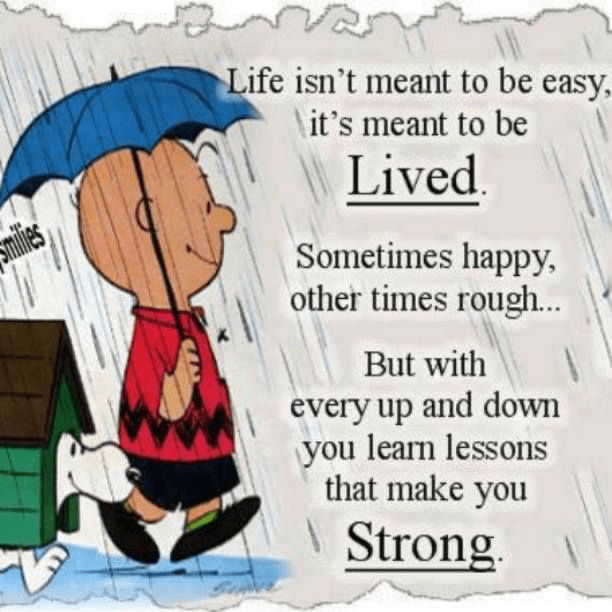
I don’t remember where my affinity with the Peanuts comic strip and shows came from, or when I became a true fan, but those who know me know that I love them! I have stuffed Snoopy, Charlie Brown, Lucy, and Woodstock characters in my office, as well as a Peanuts plaque above the door. I have a Franklin pin, a Peanuts water globe, and a Peanuts Christmas sweatshirt as well as many other items. I have used clips of various Peanuts episodes in the graduate counseling classes that I teach, and have had students write papers on topics that are assigned at different times during the semester.

The “Peanuts” comic strip, created by Charles M. Schulz, is a timeless piece of literature that continues to resonate with audiences worldwide. Despite its simple illustrations and humorous dialogue, “Peanuts” offers profound insights into human nature and mental health through its beloved characters. I am fascinated by these little people who continue to try to navigate life and the many trials they face with strength, tenacity, and sometimes tears. They have had to handle issues such as bullying, disappointment, discrimination, loss, education, and other challenges while leaning on each other to get through the hard times. Let’s explore ten mental health lessons we can learn from Charlie Brown, Lucy, Snoopy, Franklin, and the rest of the gang.

1. It’s Okay to Feel Down Sometimes (Charlie Brown)

Charlie Brown often finds himself feeling sad or defeated, whether it’s from losing another baseball game, not being able to kick the football, or struggling with unrequited love. Despite his frequent bouts of melancholy, Charlie Brown never gives up. His resilience teaches us that it’s normal to have bad days and that perseverance is key to overcoming life’s challenges.

2. It’s Necessary to Express Your Emotions (Lucy)

Lucy Van Pelt is known for her bossy and outspoken nature. While she can be abrasive, she never hesitates to express her feelings, whether she’s angry, happy, or frustrated. Lucy’s forthrightness reminds us that bottling up emotions can be harmful. It’s important to communicate how we feel to those around us.

3. We Have to Find Joy in Simple Things (Snoopy)

Snoopy finds happiness in the simplest of pleasures, like sleeping on his doghouse roof, dancing, or pretending to be a World War I flying ace. Snoopy teaches us to find joy in everyday moments and to use our imagination to escape life’s stresses occasionally.

4. Seek Help When You Need It (Charlie Brown & Lucy’s Psychiatric Booth)

Charlie Brown often visits Lucy’s makeshift psychiatric booth for advice, despite her dubious credentials. While Lucy’s advice is often more comedic than therapeutic, the act of seeking help when needed is crucial. It emphasizes the importance of reaching out for support and talking about our problems.

5. Value Friendships (The Peanuts Gang)

The friendships within the Peanuts gang, despite their ups and downs, are central. The characters support each other through various trials, illustrating the importance of strong social connections. Healthy relationships can provide emotional support and contribute significantly to our mental well-being.

6. Embrace Your Individuality (Linus, Schroeder, and Others)

Each Peanuts character is unique, from Linus’s attachment to his security blanket to Schroeder’s passion for playing the piano. Embracing what makes us unique can foster self-acceptance and confidence. Celebrating our individual quirks can lead to a more fulfilling and authentic life.

7. Deal with Bullies Constructively (Charlie Brown)

Charlie Brown often faces teasing and bullying, particularly from Lucy. Despite this, he handles it with a positive attitude and resilience. His ability to maintain his integrity and kindness in the face of adversity teaches us to cope with difficult people in a healthy and constructive manner.

8. Stay Curious and Keep Learning (Linus)

Linus is constantly curious about the world, always asking questions and seeking knowledge, whether it’s about the Great Pumpkin or understanding complex philosophical ideas. Lifelong learning and curiosity keep our minds active and engaged, promoting mental agility and growth.

9. Don’t Let Setbacks Define You (Charlie Brown)

Despite his many failures, especially with the iconic football gag, Charlie Brown never lets setbacks define him. He continually tries again, embodying resilience. This teaches us that our failures do not define us; rather, it’s our ability to keep trying that shapes our character.

10. Promote Inclusivity and Understanding (Franklin)

Franklin, one of the first African-American characters in mainstream comics, represents the importance of inclusivity and understanding. His presence in the Peanuts gang highlights the value of diversity and the importance of creating spaces where everyone feels accepted and valued. Promoting inclusivity can lead to richer, more empathetic communities.

These simple, yet relevant lessons can help us think through some of the complexities of life with a little perspective and humor. It is important that in the fast-paced world we live in to remember that we can focus on what we need and choose ourselves in the difficult times. From embracing our unique qualities and seeking help when needed, to valuing friendships and promoting inclusivity, these lessons can help us navigate the complexities of mental health. By reflecting on the experiences of Charlie Brown, Lucy, Snoopy, Franklin, and the rest of the Peanuts gang, we can find guidance and inspiration for maintaining our own mental well-being.

Nurturing Mental Wellness: A Journey of Self-Discovery and Community for My People

In a world where the noise of everyday life can drown out our inner peace, prioritizing mental wellness becomes paramount. For Black individuals, navigating the complexities of society while maintaining mental health can be particularly challenging. The historical traumas, systemic injustices, and societal pressures often weigh heavily on our shoulders. However, amidst these challenges, there lies a path to finding peace, fostering mental wellness, and building a supportive community.

Acknowledge Your Struggles

Acknowledging our struggles is the first step towards healing. It’s okay not to be okay. In a society that often expects us to be strong and resilient at all times, it’s crucial to recognize and validate our emotions, whether it’s anger, sadness, or frustration. By allowing ourselves to feel and express our emotions, we begin to unravel the layers of internalized pain and trauma.

Embrace Self-Care Practices

Self-care isn’t selfish; it’s self-preservation. Taking time for ourselves, whether it’s through meditation, journaling, or engaging in activities that bring us joy, is essential for maintaining mental wellness. In a world that constantly demands our energy and attention, carving out moments of self-care becomes a radical act of self-love and resistance.

Seek Professional Support

Therapy is a powerful tool for healing. Breaking the stigma surrounding mental health within the Black community is crucial in creating space for healing and growth. Seeking therapy doesn’t mean we are weak; it means we are courageous enough to confront our struggles and work towards healing. Finding a culturally competent therapist who understands the nuances of our experiences can make a significant difference in our mental health journey.

Cultivate Community

Community is our greatest source of strength. Finding spaces where we feel seen, heard, and understood is essential for our mental well-being. Whether it’s through grassroots organizations, online support groups, or cultural gatherings, connecting with like-minded individuals who share similar experiences can provide a sense of belonging and validation.

Embrace Cultural Identity

Our cultural identity is a source of resilience and empowerment. Embracing our heritage, traditions, and ancestral wisdom can provide us with a sense of grounding and purpose. Celebrating our Blackness, reclaiming our narratives, and challenging stereotypes are revolutionary acts that affirm our worth and dignity.

Practice Mindfulness and Gratitude

Mindfulness allows us to cultivate inner peace amidst chaos. By staying present in the moment and practicing gratitude for the blessings in our lives, we shift our focus from what’s lacking to what’s abundant. Incorporating mindfulness practices such as deep breathing, yoga, or nature walks into our daily routines can help alleviate stress and anxiety.

Advocate for Systemic Change

Advocating for systemic change is essential for creating a more just and equitable society. Addressing the root causes of mental health disparities, dismantling systemic racism, and advocating for accessible and culturally competent mental health resources are critical steps towards collective healing.

As May is National Mental Health, let us remember that nurturing our mental wellness is an ongoing journey of self-discovery, healing, and resilience. By acknowledging our struggles, embracing self-care practices, seeking professional support, cultivating community, embracing our cultural identity, practicing mindfulness, and advocating for systemic change, we empower ourselves to reclaim our mental health and find peace amidst adversity. Remember, you are not alone, and your mental health matters.